
In September 2025, I joined UBC Thunderbots, a student engineering design team at the University of British Columbia. The primary goal of the design team is to build autonomous soccer robots to compete in the Small Size League of the international RoboCup competition and conference. When I was accepted to be on the team last year, I was most looking forward to developing my software engineering skills, but along the way, I learned a valuable lesson about what allows engineering innovation to happen.
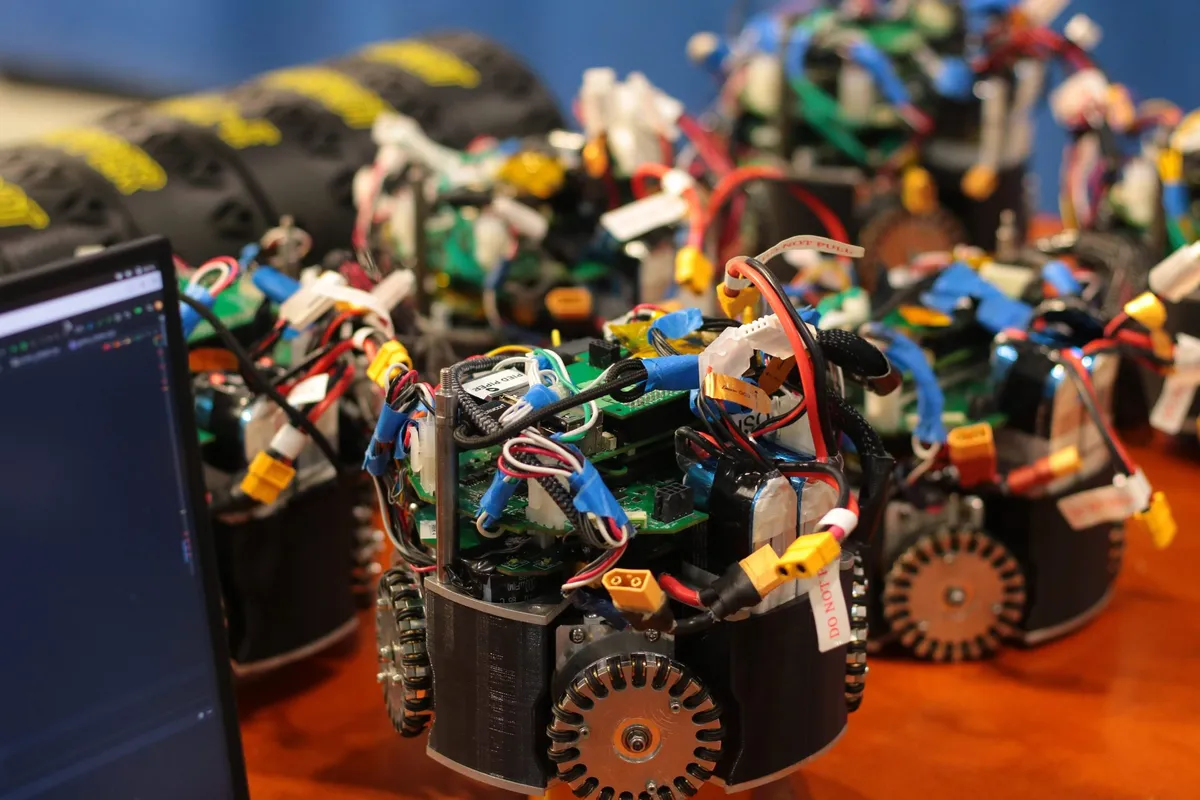
Throughout this past year at Thunderbots, I’ve improved on a lot of important skills such as using git and code reviewing, which are all related to working with a team on a single software project. I’ve also learned lots about the technical aspects related to the C++ and Python codebase. But the other aspect of being a part of a student design team is not just working on the robots, but also looking for sponsorships and applying to grants. For Thunderbots, we have an Admin sub-team that plans internal social gatherings, external events, communicates between sub-teams, runs our social media, and also handles team finances. However, the work of reaching out to potential sponsors is also given to other team members, as sponsorships determine if we have enough money to go to competition or not each year.
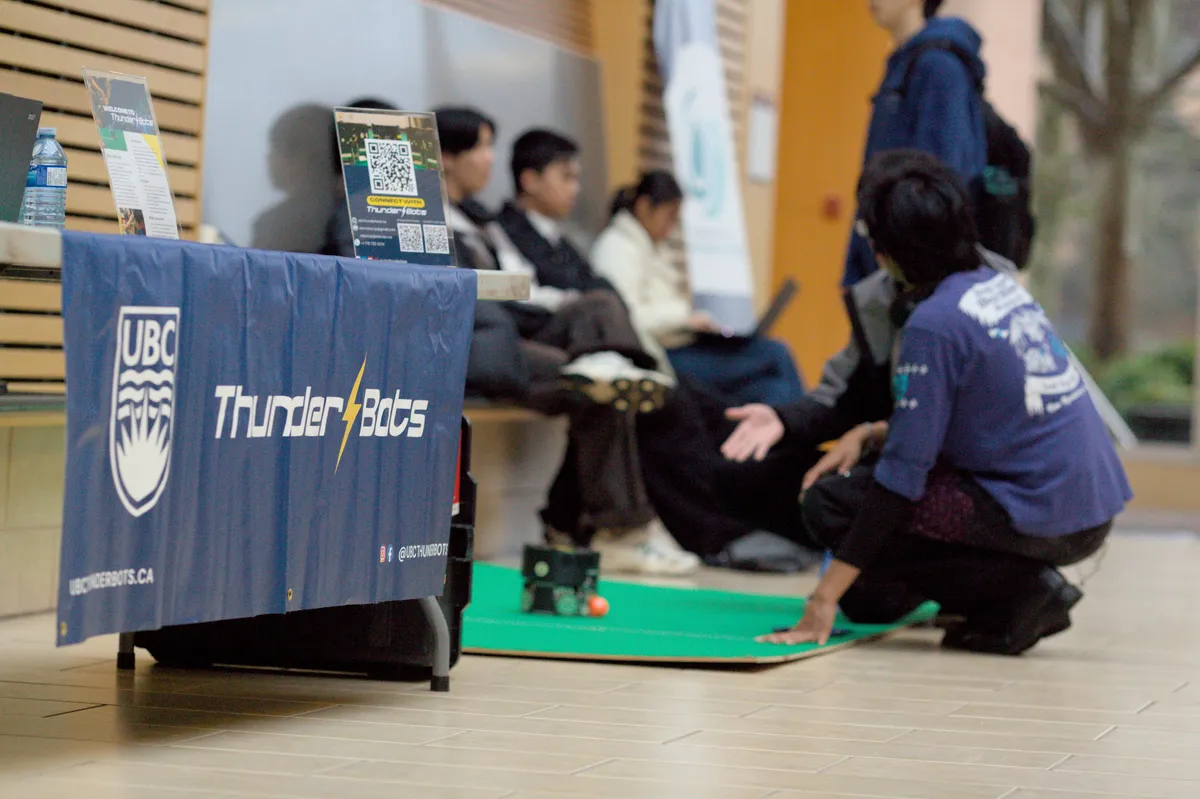
So, I started to develop a routine for reaching out to sponsors, tracking the status for each sponsor on a large shared spreadsheet, and researching companies then reaching out through email to be as professional as I could. Over the period of a few months, I reached out to several companies, one of which was Foreseeson, a company located here in the Lower Mainland that primarily does electronics manufacturing. A funny sidenote is that I had some experience with looking for sponsorships from my role at the UBC Science Undergraduate Society, but I somehow managed to accidentally email the president of the company directly about a possible sponsorship… Despite that mistake, I continued communications with an employee on their marketing team; within a month or two of back and forth emails and phone calls, we had planned out a visit to their headquarters where we would get a tour of their manufacturing facilities and also give a presentation about our team.
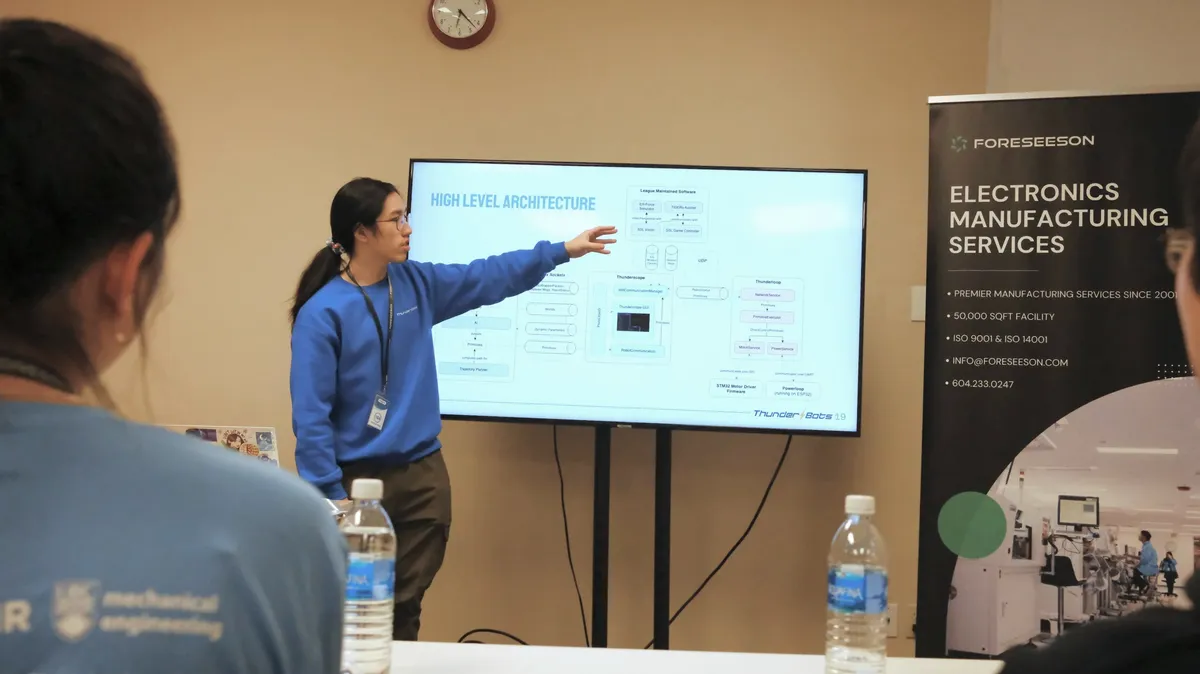
It was quite a unique experience being able to tour their headquarters; we got to learn about how the company has changed over the years as different technologies were developed, how their focus was not just on electronics manufacturing, but also developing cybersecurity software and EV charging stations. We also got to see their assembly lines; one interesting part was seeing PCBs being carried by a conveyor belt through an oven that precisely melts the solder on the boards to attach all the electrical components. I also learned that this was a main reason why PCBs should be designed with larger electrical components on one side, so that the smaller components can be soldered upside-down which won’t fall off unlike the larger components.
As for Thunderbots’ presentation, I was the only software member that was available to attend, which was a great opportunity to test my understanding of our software while creating and presenting the slide deck. Surprisingly, this presentation was also the first time I’ve gotten to see what our mechanical and electrical teams have been working on. The way that our team is separated by sub-teams and how the design cycle this year has delayed the manufacturing of robots means that I never had the chance to see the progress our other sub-teams have been up to. I learned so much about how our separate teams’ projects integrate together: how the Raspberry Pi communicates with the UI, power, and motor driver boards, the capacitors that discharge to power the solenoid which moves the robot’s kicker, and how we are integrating an IMU to better estimate the robot’s velocity and positioning using software. I felt like the presentation was not only useful for Foreseeson, but I had learned so much about our own team and also got to know the people who presented that day much better after this experience.
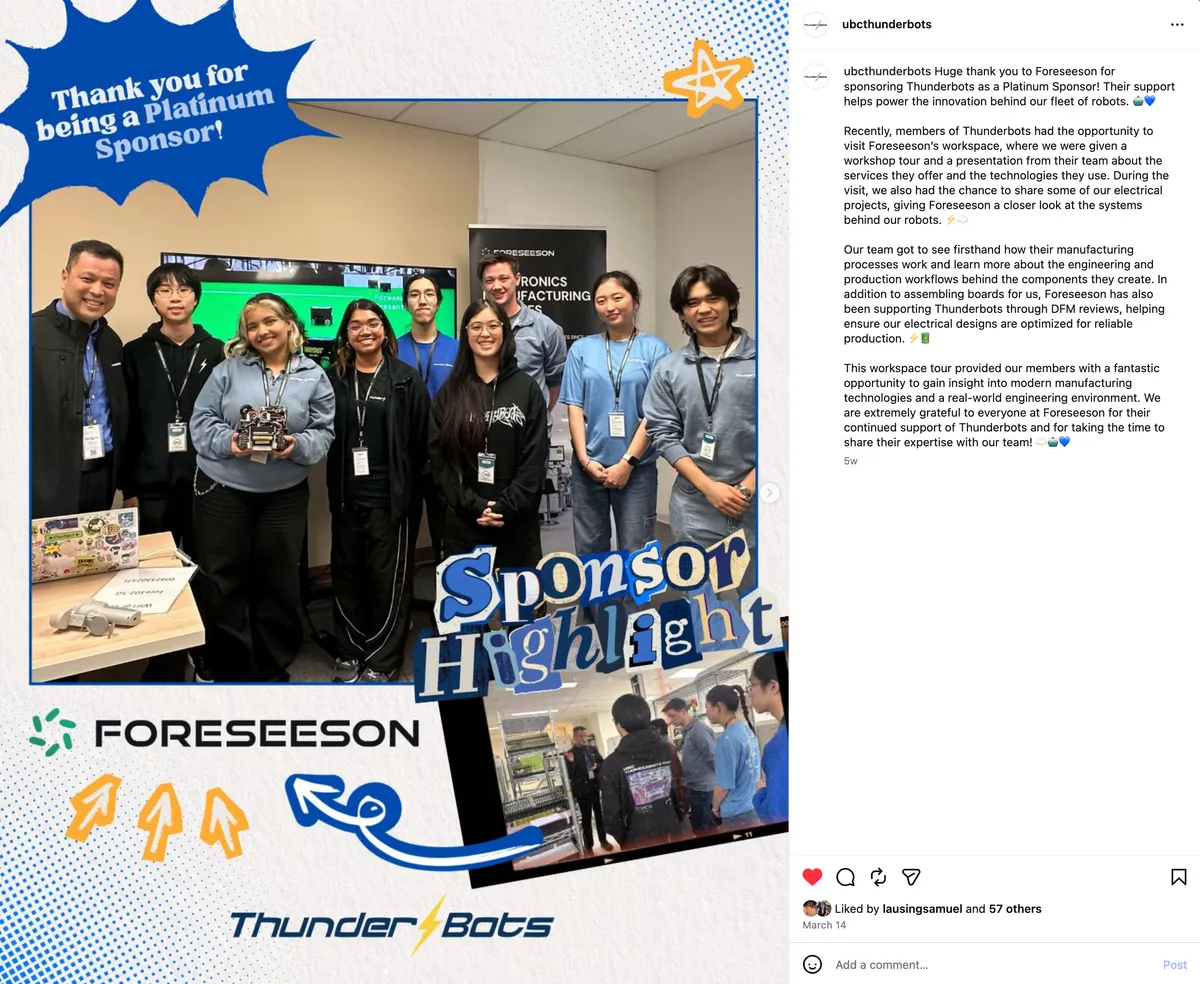
A few days after the presentation, we would receive an email from Foreseeson that they would commit to being a platinum sponsor, where they would contribute by manufacturing all of our electrical team’s boards. I was grateful, for the team being one step closer to being able to compete internationally this year, and to be able to make a meaningful contribution to the team by reaching out, negotiating, and securing this sponsorship. I’ve also gained an appreciation for everyone on our Admin team for handling the paperwork and finances, as well as sponsors for providing financial and in-kind contributions, so that the Thunderbots team can continue to be an environment for busy undergraduate students to work on engineering innovation.